Planning a remodel or hoping to open up a view in Laguna Beach? If your dream home sits near the shoreline or on a bluff, you may need a Coastal Development Permit before you touch a wall or plant a shovel. The coastal rules are designed to protect public access, scenic resources and sensitive habitats, which means even small exterior changes can trigger a review. In this guide, you will learn when Coastal Development Permits apply, who issues them, how long they take, and what to verify before you buy. Let’s dive in.
Coastal permits in Laguna Beach
A Coastal Development Permit, or CDP, is a formal approval required for certain development in California’s coastal zone. The California Coastal Commission administers the Coastal Act, while many cities, including Laguna Beach, implement local coastal rules through a certified Local Coastal Program. That two-level system means you must understand both city and state roles before you plan improvements.
Laguna Beach issues many CDPs consistent with its certified Local Coastal Program. The California Coastal Commission still retains jurisdiction in specific areas and has appeal authority for certain local decisions. Knowing who the decision-maker is will shape your strategy, timeline and conditions of approval.
Who issues your permit
There are two main routes:
- City-issued CDP. If your property is in the coastal zone where Laguna Beach has permit authority under its certified Local Coastal Program, the City’s Planning Division processes the CDP. You can start by reviewing the City’s planning resources on the City of Laguna Beach Planning Division.
- Commission-issued CDP. If the California Coastal Commission has retained jurisdiction over your parcel or the type of work, the Commission processes the permit. You can learn more about the Commission and the Coastal Act at the California Coastal Commission.
Understanding appeals
Even when the City issues a CDP, some decisions can be appealed to the California Coastal Commission if they fall within an appealable area. Appeals are time-limited, and deadlines are strictly enforced. Always confirm with City or Commission staff whether a decision is appealable and what the filing window is.
When a CDP is required
Many common projects in Laguna Beach can trigger a CDP. These include:
- New construction of a primary residence or accessory structure in the coastal zone.
- Additions or expansions that increase floor area or height, add roof decks or upper stories, or alter visible exterior massing.
- Exterior remodels that change the building footprint, elevations or the final appearance from public viewpoints.
- Grading, excavation, fill, driveway expansions and retaining walls.
- Shoreline protection such as seawalls, revetments and bulkheads.
- Bluff or slope stabilization including tie-backs and structural retaining systems.
- New or modified access to the beach, or any restriction on public access.
- Vegetation removal or habitat-altering work in sensitive areas.
- Demolition tied to replacement development, or utilities and wastewater changes that may affect coastal resources.
These triggers reflect core Coastal Act priorities: public access, protection of coastal resources and thoughtful siting and design. Projects that affect bluffs, shorelines, public views or habitats face higher scrutiny.
Common exemptions
Some work does not require a CDP, but exemptions must be verified by the proper agency:
- Interior-only remodels that do not change the exterior footprint, height, or grading are often exempt.
- Minor repairs and maintenance may qualify for an exemption.
- Emergency permits may be available for immediate health and safety issues, with follow-up documentation required.
Important: exemption determinations are formal. Do not assume your project is exempt. Obtain a written determination from the City or the California Coastal Commission before you proceed.
What to expect in the process
Approvals vary by complexity, but most local CDPs follow a predictable path.
Typical steps
Pre-application. Meet with planning staff. You may be asked for geotechnical, biological and stormwater materials up front, especially for bluff or steep-slope sites.
Application submittal. Provide plans, photos, required technical reports and fees.
Completeness and noticing. The City reviews completeness and provides public notice when required.
Staff review and conditions. Staff prepares a report and draft conditions to protect coastal resources.
Decision and hearings. Minor items may be handled administratively. Larger projects are heard by the Planning Commission, and some may go to City Council.
Appeal period. If the decision is in an appealable area, there is a short window to appeal to the California Coastal Commission. If an appeal is accepted, the Commission schedules a hearing and may affirm, overturn or remand the decision.
Timelines you can expect
- Small administrative actions or clear exemptions: about 2 to 8 weeks.
- Typical local CDP for a modest addition or exterior remodel: roughly 2 to 6 months from pre-application to final local action.
- Complex cases such as bluff-top homes, shoreline protection, multi-story additions or habitat impacts: commonly 6 to 18 months or more.
- Appeals to the California Coastal Commission: add several months, depending on Commission schedules and staff analysis.
Common causes of delay
- Required geotechnical and slope stability reports in Laguna’s steep topography.
- Biological surveys and mitigation plans near sensitive habitat.
- Sea-level rise and coastal hazard analysis for bluff and shoreline projects.
- Public opposition or neighborhood appeals that lead to revisions or added hearings.
- Incomplete applications or multiple redesign cycles.
How permits affect remodels and views
In Laguna Beach, what feels like a minor exterior change can still require a CDP if it alters visible massing, height or footprint. Expect the review to focus on scenic resources, public views, and site stability. Height limits, step-backs and design conditions are common tools to reduce visual impacts.
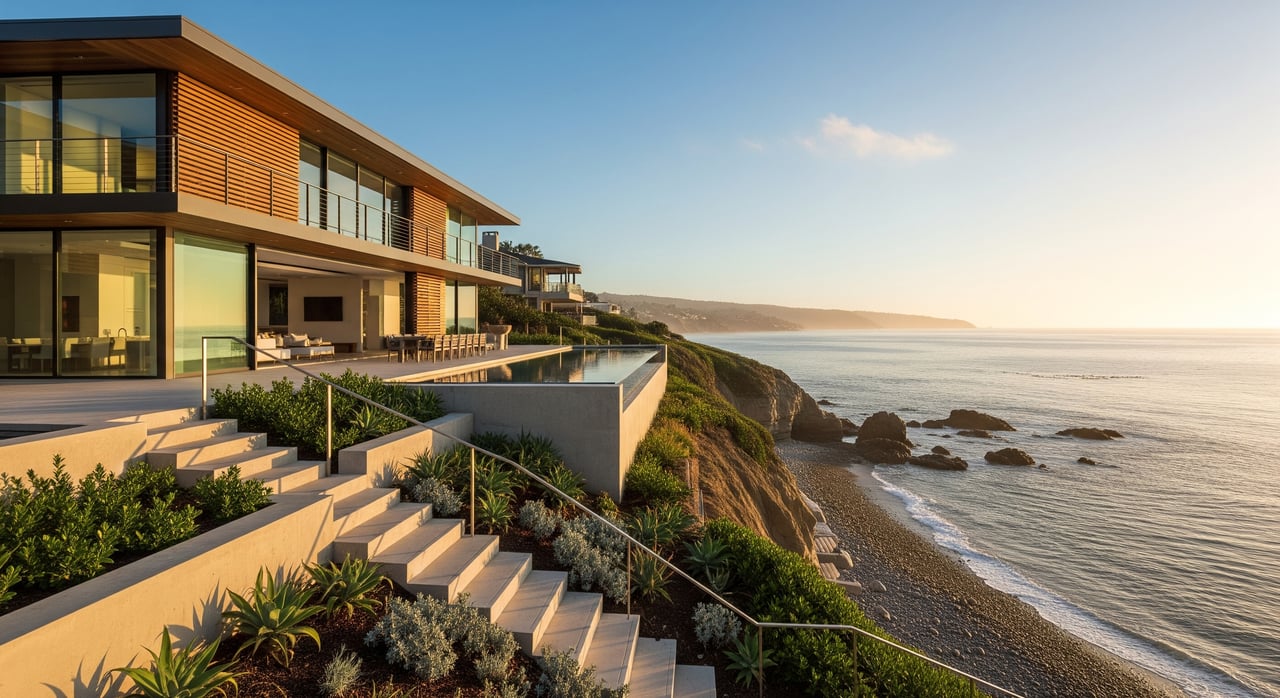
Bluff-edge and shoreline properties often face stricter setbacks and engineering requirements. The City and the California Coastal Commission evaluate shoreline armoring carefully. Hard armoring is generally disfavored and is often permitted only to protect existing development when relocation is not feasible and when mitigation is provided.
Approvals frequently include conditions such as erosion control, stormwater measures, lighting limits, native landscaping and habitat mitigation. Many CDPs have recorded conditions or covenants that run with the land, which means they bind future owners. You should review these conditions before you purchase.
Private view rights are not guaranteed under California law. Coastal policies prioritize public scenic resources and public access. While Laguna’s Local Coastal Program addresses visual impacts, protection of private views between neighbors is limited.
North Laguna considerations
North Laguna includes steep slopes, bluff-top homes and several scenic corridors and public viewpoints along the coastline. In areas like Emerald Bay, Crown Point, the Tree Streets and Cliff Drive, projects that change rooflines, decks or façades visible from public vantage points often receive detailed review. For bluff-top properties, expect geotechnical studies and sea-level rise analysis to inform setbacks and design feasibility.
Due diligence checklist for buyers
Before you remove contingencies, build a clear record. Here is a practical checklist you can use:
- Ask the seller for all permit records and Coastal Development Permit numbers. Request copies of any CDPs, staff reports and approved plans.
- Pull the title report and look for recorded conditions or mitigation agreements tied to prior coastal approvals.
- Verify with the City of Laguna Beach in writing whether prior work was completed under valid CDPs and whether any compliance issues or open conditions remain.
- Confirm whether your parcel is under the City’s Local Coastal Program or within California Coastal Commission retained jurisdiction. Ask staff to clarify appealability for future work.
- Check for shoreline armoring, bluff-top structures or steep-slope features that trigger stricter standards.
- Request available geotechnical or biological reports from past approvals. These often outline constraints and what future improvements are feasible.
- Ask whether prior approvals were appealed to the California Coastal Commission and what the outcome was.
Who to contact and hire
- City of Laguna Beach Planning Division for permit files, LCP maps and procedures. Start at the City of Laguna Beach Planning Division.
- California Coastal Commission for jurisdiction questions, appeals history and Commission CDP files. See the California Coastal Commission.
- Coastal or geotechnical engineer for bluff, slope and foundation feasibility.
- Coastal planner or land-use consultant for permit strategy and risk.
- Real estate attorney familiar with coastal law for complex recorded conditions.
- Architect or designer with coastal experience who understands Laguna’s LCP standards.
Smart timing and strategy tips
- Start early with a pre-application meeting. Early staff feedback can save months of redesign.
- Build time into your purchase timeline. If you intend to remodel shortly after closing, assume a realistic CDP window based on your project type.
- Get written determinations. Whether you seek an exemption or a specific interpretation, keep the paper trail.
- Budget for technical studies. In bluff or slope areas, geotechnical and hazards analyses are often non-negotiable.
- Design for visibility. If your home is visible from public viewpoints, expect conditions aimed at minimizing scenic impacts.
Final thoughts
Buying in Laguna Beach is a lifestyle decision, and the coastal process is part of safeguarding what makes this shoreline special. With the right plan, you can respect the coastal rules and still achieve a thoughtful remodel that fits your goals. If you are considering North Laguna neighborhoods like Emerald Bay, Crown Point, the Tree Streets or Cliff Drive, you will benefit from early due diligence and an experienced guide.
If you want a private, clear-eyed assessment of a property’s coastal permit history and remodel feasibility, reach out. I am happy to coordinate with City and Commission staff and connect you with trusted coastal specialists. Connect with Daniel Haney to discuss your plans.
FAQs
Do interior remodels in Laguna Beach need a coastal permit?
- Interior-only work that does not change exterior footprint, height or grading is often exempt, but you must obtain a formal written exemption from the City or the California Coastal Commission before proceeding.
How long do coastal permits take in Laguna Beach?
- Simple administrative actions can be 2 to 8 weeks, typical modest remodels run about 2 to 6 months, and complex bluff or shoreline projects commonly take 6 to 18 months or more, plus time if an appeal is involved.
Who decides my permit: the City or the Coastal Commission?
- Many permits are issued by the City under its Local Coastal Program, but some parcels or project types fall under California Coastal Commission jurisdiction, and certain City decisions are appealable to the Commission.
What happens if past work lacked a Coastal Development Permit?
- Unpermitted coastal work can lead to enforcement, added conditions or required remediation. Verify permit history with City and Commission staff and factor potential compliance costs into your purchase.
How do coastal permits affect ocean views from my home?
- Coastal policies focus on protecting public scenic resources rather than private view rights between neighbors. Expect design conditions that minimize public view impacts rather than guarantees of private view preservation.